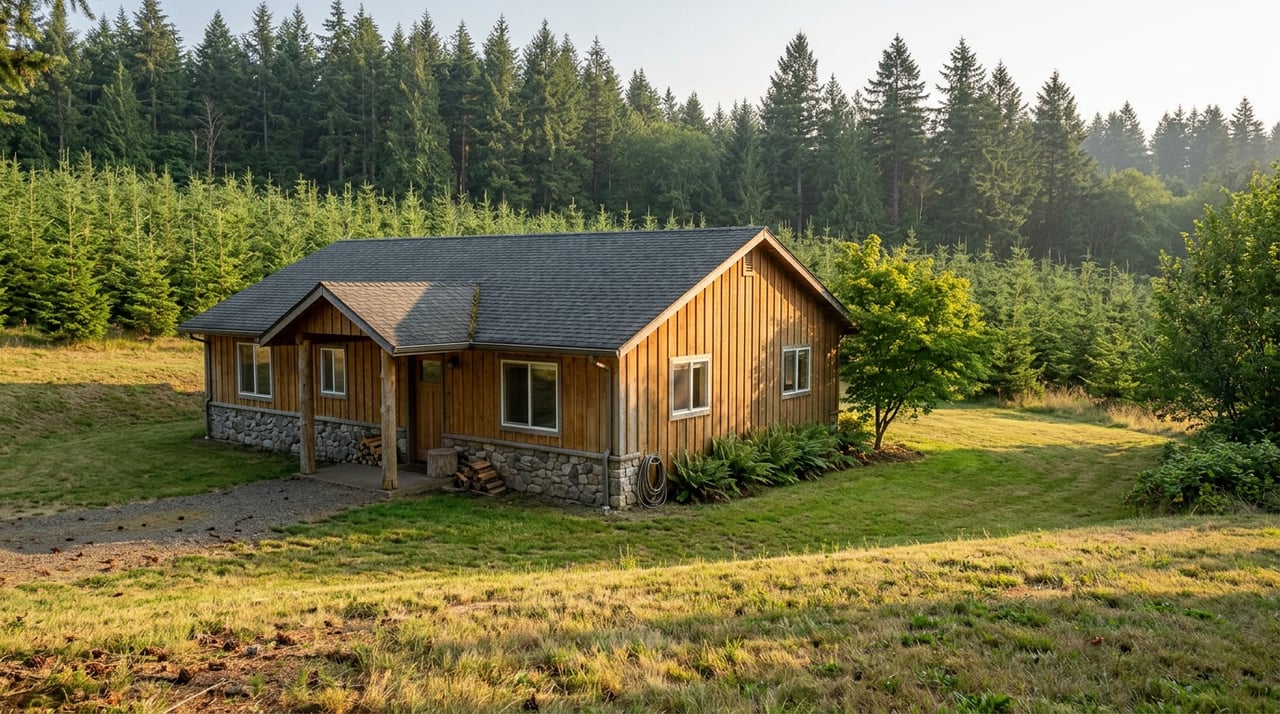
The Real Deadline on a Cowlitz County Timberland Sale Isn't in Your Purchase Agreement
August 27, 2026
August 27, 2026
Picture this: you've owned forty acres of Designated Forest Land outside Toutle or Ryderwood for two decades, you've accepted a solid offer, and your purchase and sale agreement has a closing date circled on the calendar. Everyone signs. Everyone assumes the hard part is done. Then, a week before closing, the title company calls asking whether the Cowlitz County Assessor's Office has received a Notice of Continuance. Nobody mentioned that form. Now the closing date is in question, and so is a tax bill that could run into the thousands of dollars, not because of anything wrong with the sale, but because of a form and a calendar window that never showed up in the contract.
That scenario is common enough in Southwest Washington's land market that it's worth walking through carefully, because the mechanism behind it surprises even experienced sellers. The tax consequence on classified timberland doesn't hinge on your sale price, your closing date, or even the deed itself. It hinges on what your buyer intends to do with the land, whether they're willing to put that intention in writing, and whether that paperwork reaches the Assessor's Office in time.
Washington's Open Space Taxation Act, along with the separate Designated Forest Land program under RCW 84.33, lets landowners have their property valued at its current use rather than its highest and best use. In plain terms, if you're growing timber on five or more acres, you pay property tax based on what the land is worth as forest, not what it might be worth if someone paved it for a subdivision. That's the entire point of the classification, and it's why a lot of Cowlitz County acreage carries a much lower assessed value than raw market comparables would suggest.
The tradeoff is that the classification comes with strings attached, and those strings follow the land through a sale. When classified land changes hands, the county doesn't ask what you sold it for. It asks whether the new owner plans to keep using it the way you were, and whether they're willing to say so formally. That single question determines whether the sale closes clean or triggers a tax bill.
Cowlitz County administers two related but distinct classifications, and mixing them up is one of the more expensive mistakes a seller can make. Designated Forest Land and Open Space Timber sound similar and both get removed the same way (a sale where the buyer doesn't continue the classification) but the tax that follows removal is calculated differently and, in one case, includes a penalty the other doesn't.
| Designated Forest Land (RCW 84.33) | Open Space Timber (RCW 84.34) | |
|---|---|---|
| Tax triggered on removal | Compensating Tax | Additional Tax |
| How it's calculated | Based on current assessed value under forest land grades | Difference between taxes paid and taxes that would have been owed, for the prior 7 years |
| Interest | Applies from the point the tax could have been paid without interest | Applies at the delinquent property tax rate |
| Penalty | None described in the removal statute | 20% penalty on the sum of additional tax and interest |
| Penalty waiver | Not applicable | Waived if land has been classified at least 10 years and owner requests withdrawal |
The practical takeaway: if your land is enrolled in the Open Space Timber program and you're inside that 10-year window, the penalty alone can add a fifth on top of seven years of back-tax difference, before interest is even factored in. That's not a rounding error on a closing statement.
Here's the part that catches sellers off guard most often. The tax isn't triggered by the transfer of the deed. It's triggered by whether the new owner signs a Notice of Continuance stating they intend to keep using the land for growing and harvesting timber. If they sign it, and the Assessor's Office accepts it, the classification carries forward and nothing is owed at closing. If they don't sign it, or the office determines they don't actually intend to farm timber, the land gets removed from classification at the moment of sale, and the seller, not the buyer, is the one who owes the resulting tax.
That last detail matters more than it seems. Washington law firms that work with current-use landowners have pointed out that sellers of classified land need to make sure the new owner signs the Notice of Continuance, because otherwise the seller is the one left holding the liability at the time of sale. If your buyer is planning to build a home site, subdivide for resale, or simply hasn't decided what they'll do with the acreage, that uncertainty becomes your financial exposure, not theirs, unless the purchase agreement addresses it directly.
Even when a buyer is willing to sign, timing can still derail things. Cowlitz County's own procedures for conveying classified land are specific on this point: a Request for Conveyance, along with any required Notice of Continuance, must be submitted to the Assessor's Office at least fifteen calendar days before the expected closing date. That requirement comes straight from WAC 458-30-275(3), and it's not a suggestion. The county treasurer cannot stamp the Real Estate Excise Tax affidavit as approved for recording until the assessor has either confirmed continuance or calculated the compensating or additional tax owed, and the county recorder can't accept the deed until that stamp is in place.
In other words, a closing scheduled for a Friday needs its conveyance paperwork in front of the assessor no later than two and a half weeks earlier, not the week of closing. Real estate transactions on classified acreage routinely move faster than that timeline allows, especially when the classification question doesn't surface until late in escrow. A rushed closing on unclassified land is an inconvenience. A rushed closing on Designated Forest Land or Open Space Timber can mean recording gets delayed while the assessor calculates a tax bill nobody budgeted for.
If a parcel under 20 acres is involved, there's an added wrinkle: Cowlitz County generally requires a formal timber management plan, prepared by a professional forester or someone with comparable expertise, before the classification can convey to the new owner. Parcels over 20 acres can typically satisfy that requirement with a simpler Timber Report instead. Either way, that document needs to exist and be reviewed before the 15-day window closes, not during it.
There's one meaningful escape hatch worth knowing about if you're the one holding classified land and thinking about your options before you list. Under RCW 84.34.070, an owner whose land has been classified as Open Space for at least ten years can request a withdrawal from classification on their own terms. The additional tax and interest are still owed, calculated the same way as an involuntary removal, but the 20% penalty is waived. That's a meaningful difference if you're weighing whether to sell now, wait, or restructure how you're marketing the property.
This waiver only applies to a voluntary withdrawal request, not to a removal triggered by a sale where the buyer declines continuance. If you're approaching that 10-year mark and considering a sale, the sequence in which you request withdrawal versus accept an offer can change your tax exposure meaningfully. That's a conversation worth having with your assessor's office and your closing team before you sign a listing agreement, not after.
If you own classified timberland or open space acreage and you're weighing a sale, a few steps early in the process protect you from discovering any of this at the closing table:
None of this changes what your land is worth. It changes whether the number on your closing statement matches the number you expected, and whether your closing date holds.
Does this apply to a residential lot with a small acreage buffer, or only to working timberland? The classification generally excludes the land under a residence, typically a minimum one-acre building site, so a home site itself usually isn't subject to compensating or additional tax. The surrounding acreage enrolled in the program is what carries the tax consequence if classification is removed.
What if my buyer says they want to keep the land forested but won't sign anything? Verbal intent doesn't satisfy the requirement. The Notice of Continuance is a specific form attached to or filed alongside the Real Estate Excise Tax affidavit, and without a signed copy, the assessor treats the classification as ended at the time of sale.
Can the tax be appealed? Property owners can appeal both the removal decision and the assessed valuation used to calculate compensating or additional tax to the county Board of Equalization. That appeal has its own filing deadline separate from the conveyance timeline, so it's worth asking about early rather than after a bill arrives.
Does subdividing the property automatically trigger removal? Not necessarily. An assessor generally can't remove forest land classification solely because it's been subdivided, as long as the resulting parcels stay contiguous, total at least five acres, and remain primarily devoted to growing and harvesting timber.
Southwest Washington's land market rewards sellers who understand these mechanics before they list, not after an offer is on the table. If you're weighing a sale of classified acreage anywhere in Cowlitz County and want a clear read on your timeline and tax exposure before you sign anything, Woodland Real Estate has spent decades walking landowners through exactly this kind of transaction. Let's Connect.
We understand that buying or selling a property is more than just a transaction: it’s a life-changing experience. That’s why our team of highly seasoned real estate professionals is dedicated to providing exceptional, personalized service for all of our clients.